
Business management software can make daily operations easier by bringing information, processes, and teams into one system. However, as a company grows, the software that once worked well may no longer be able to keep up with increasing operational demands.
Using outdated or limited software can lead to duplicate data, manual work, reporting delays, and disconnected departments. Recognising the signs early can help businesses determine when it may be time to consider a more capable business ERP system.
1. Your Teams Rely Too Much on Spreadsheets
Spreadsheets can be useful for small tasks, but relying heavily on them for core business processes can become difficult as operations expand.
Employees may maintain separate spreadsheets for sales, inventory, purchasing, finance, or customer information. This can result in duplicated data and inconsistent records.
An integrated ERP system can bring key business information into a central platform, reducing the need to maintain multiple disconnected files.
2. Departments Are Working with Different Data
A growing business may have separate systems for finance, sales, inventory, HR, and operations. When these systems do not communicate effectively, employees may struggle to access the information they need.
For example, the sales team may have one customer record while the finance department maintains another. This can create unnecessary reconciliation work and make it harder to get an accurate view of business activity.
A connected business ERP system can help different departments work from shared and more consistent information.
3. Reporting Takes Too Long
Business leaders need timely information to make informed decisions. If employees have to manually collect data from multiple systems before creating a report, valuable time can be lost.
Signs of a reporting problem include:
- Frequent manual data collection
- Repeated spreadsheet consolidation
- Delayed financial reports
- Difficulty tracking key performance indicators
- Limited access to real-time information
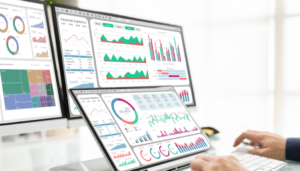
Modern ERP platforms can automate data collection and provide dashboards and reports that make business information easier to access.
4. Manual Data Entry Is Increasing
As transaction volumes grow, manual data entry becomes increasingly difficult to manage.
Employees may have to enter the same information into multiple applications, increasing the possibility of errors. Repetitive administrative tasks can also take employees away from higher-value activities.
ERP software can automate selected workflows and allow information entered in one part of the system to be used across connected processes.
5. Inventory Management Is Becoming Difficult
Inventory problems are often a sign that existing software is no longer sufficient for a growing business.
If your teams regularly struggle to determine current stock levels, track movements, manage multiple warehouses, or identify slow-moving products, your existing system may lack the required capabilities.
An ERP system with integrated inventory management can provide better visibility into stock and related business processes.
6. Your Business Has Added New Locations or Markets
Expansion can create new management challenges.
Opening additional branches, warehouses, or operating across different markets may require more sophisticated systems for financial management, inventory, purchasing, sales, and reporting.
Software designed for a smaller operation may not provide the scalability or centralised visibility required to manage a more complex organisation.
7. Your Current Software Does Not Integrate Well
Businesses often use multiple applications for different functions. The problem occurs when these applications cannot exchange information effectively.
Poor integration may result in:
- Duplicate data entry
- Manual exports and imports
- Reporting inconsistencies
- Process delays
- Increased administrative work
A modern ERP solution can connect important business functions and reduce unnecessary data silos.
8. Employees Are Creating Workarounds
One of the clearest warning signs is when employees regularly find ways around the software.
They may create their own spreadsheets, use separate tools, maintain personal databases, or develop manual processes because the existing system does not support their requirements.
These workarounds can make business processes harder to control and create additional sources of data that management has to reconcile.
9. You Cannot Easily Access Real-Time Business Information
Business decisions become more difficult when important information is outdated.
Management may need to know current sales performance, outstanding payments, inventory levels, purchasing activity, or operational performance. If obtaining these details requires several manual steps, the existing system may be limiting visibility.
A modern ERP platform can provide centralised access to business information, helping decision-makers understand operations more quickly.
10. Your Customer and Sales Processes Are Becoming More Complex
Growth often brings more customers, sales channels, products, and transactions. Basic management software may not be designed to handle this increased complexity.
If sales teams have difficulty tracking customer information, quotations, orders, follow-ups, or transaction history, it may be worth reviewing whether the existing technology can scale with the business.
Integrating CRM and ERP capabilities can help businesses connect customer-facing processes with finance, inventory, and operations.
11. Your Software Cannot Support Your Future Plans
Software should not only solve today’s problems. It should also support the direction your business wants to take.
If you are planning to expand into new markets, add business units, introduce new products, increase automation, or improve reporting, your current system needs to be capable of supporting those plans.
A lack of scalability can become expensive if businesses repeatedly replace software as they grow.
12. Employees Spend More Time Managing Data Than Using It
Business data is valuable when it helps teams understand performance and make decisions. If employees spend most of their time collecting, cleaning, transferring, and reconciling data, the organisation may not be getting enough value from its current software.
An integrated system can reduce repetitive information management and allow teams to focus more on analysis and business activities.
What Should You Consider Before Moving to an ERP System?
Recognising these signs does not automatically mean that you need to replace your software immediately. Businesses should first evaluate their current processes, identify major limitations, and define their future requirements.
Consider questions such as:
- Which processes are creating the most manual work?
- Which departments need better integration?
- Where are data inconsistencies occurring?
- What reports does management need?
- Will the business add locations or markets?
- Which processes could be automated?
- Does the existing software have the flexibility to scale?
The answers can help determine whether upgrading existing tools, adding integrations, or implementing an ERP solution is the most appropriate approach.
Why Choosing the Right ERP Matters
ERP implementation is a significant business decision. The right system should match the organisation’s processes, industry requirements, growth plans, and reporting needs.
A well-planned ERP solution can bring business functions together, improve information visibility, reduce repetitive work, and provide a stronger foundation for future growth.
At Mentor Performance, businesses can explore customised ERP solutions designed to support their operational and management requirements. A proper assessment of your current processes can help identify where an integrated ERP approach could deliver the greatest value.
Conclusion
The need for new business software is often revealed gradually. Increasing spreadsheet dependency, disconnected departments, manual reporting, poor integration, and limited scalability can all indicate that your current management software is struggling to keep pace with business growth.
Recognising these signs early gives your organisation an opportunity to review its technology strategy before operational challenges become bigger obstacles.
For growing businesses, a scalable and integrated business ERP system can provide the centralized data, automation, and visibility needed to manage increasingly complex operations.